
Purple Rainfall
Homage to a tree worthy of a Prince reference

(It should take about four minutes to read this 955-word post. There are links to the sources at the end. Thank you for your time.)
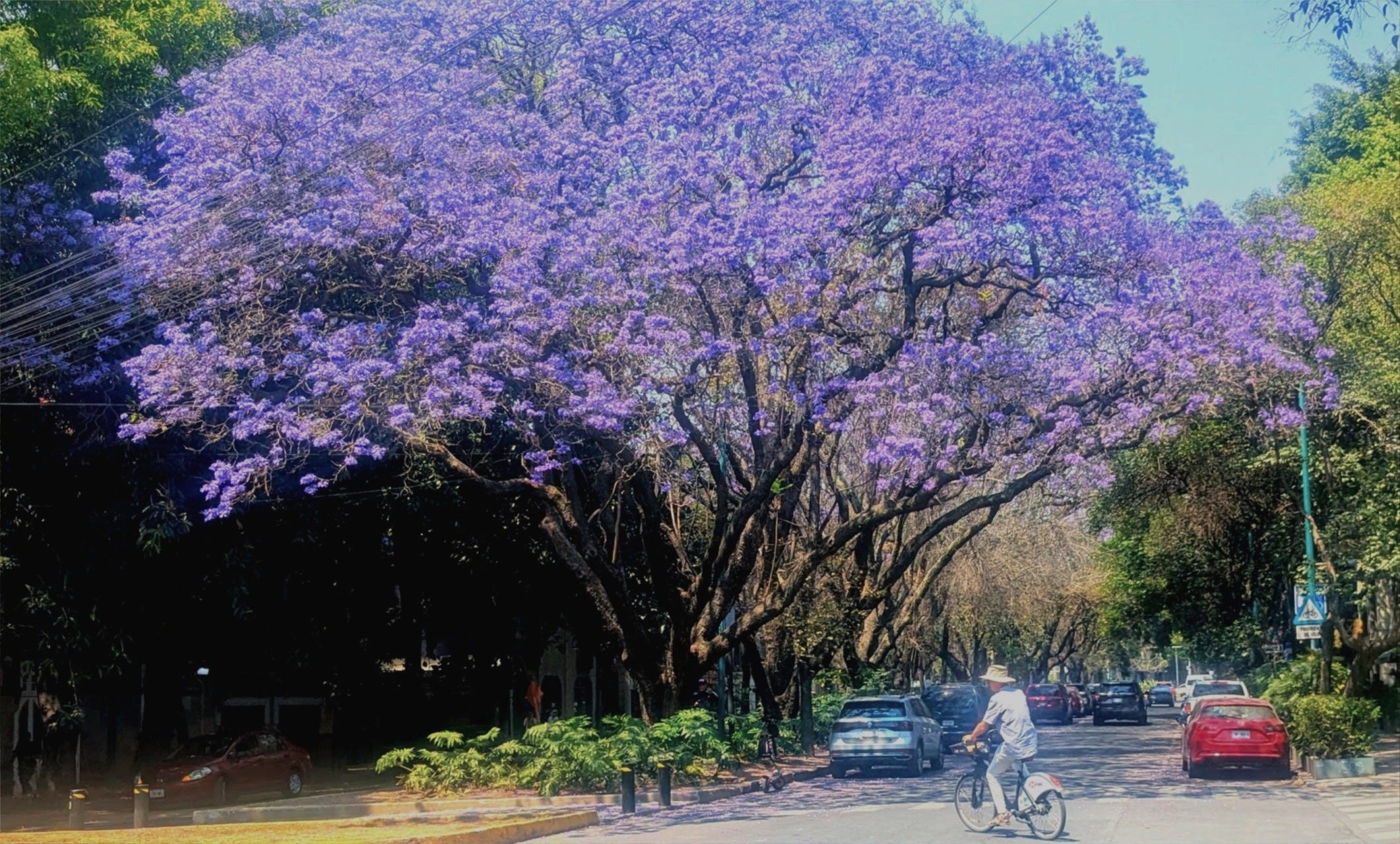
I saw something magical on my March flight into Mexico City.
The jacaranda trees were in bloom. (Jacaranda is pronounced as ha-ca-RAN-da.)
I was thrilled.
I didn't get a photo from the plane, but I had another chance later for an aerial view of jacarandas. Below are a couple of photos from a ride on Mexico City's cable cars used for public transportation.


I’d missed most of the jacaranda flowers on my last visit to Mexico City. My husband and I arrived there in late February 2025, which should have been prime time to see the purple blooms on jacarandas.
But the jacarandas that year woke up in the middle of winter, as Andrea Bizberg put it in an article in the magazine Gatopardo (..se han despertado en pleno invierno.)
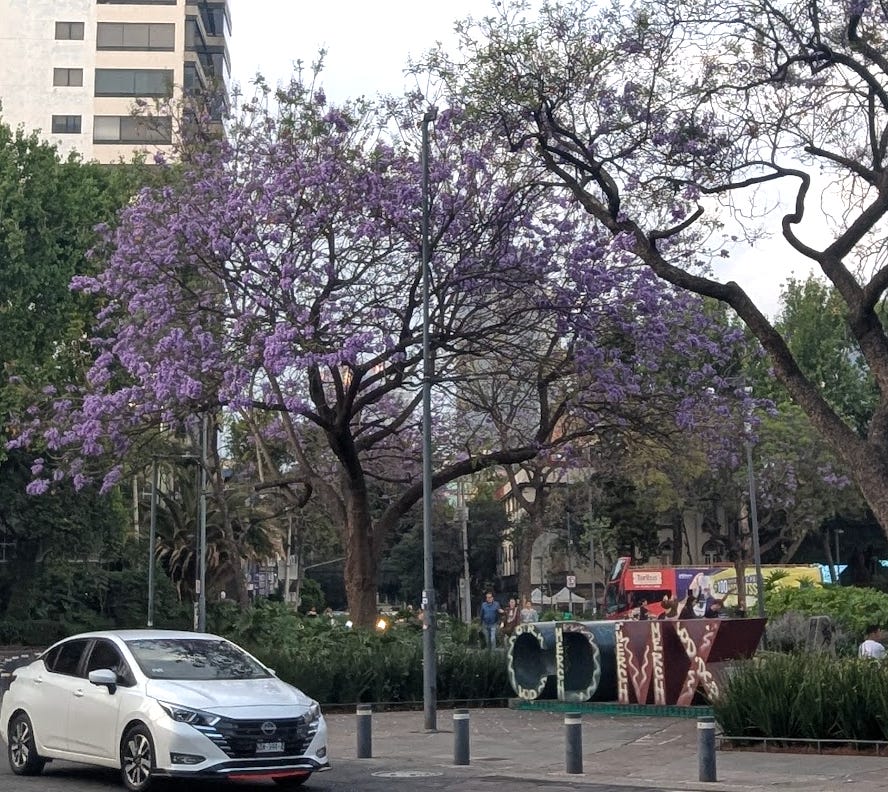
Bizberg writes of missing out on their splendor in 2025. All that remained as a testament to this untimely blooming, she wrote, were the “little bells (campanitas)” of purple dropped on the pavement.
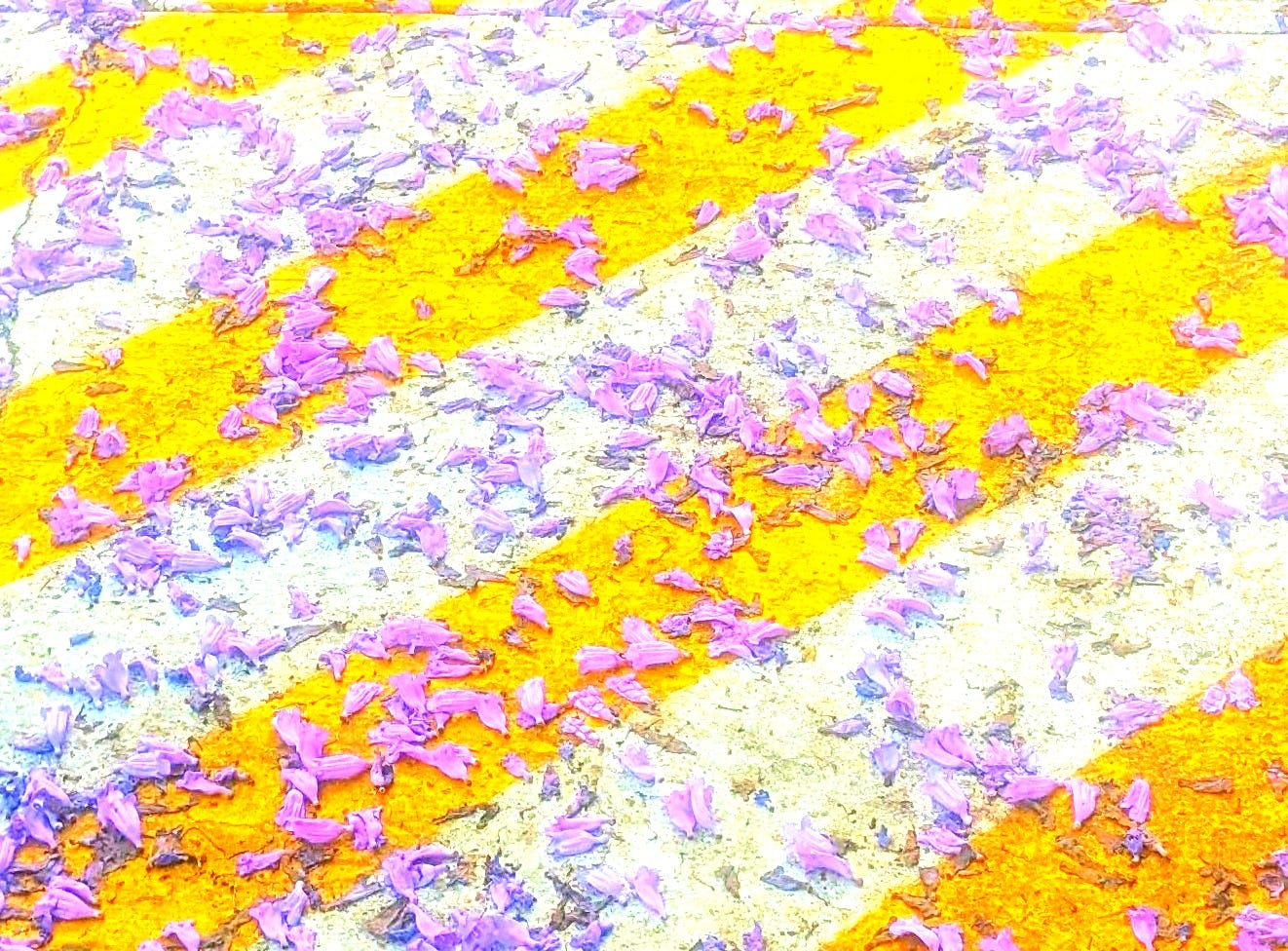
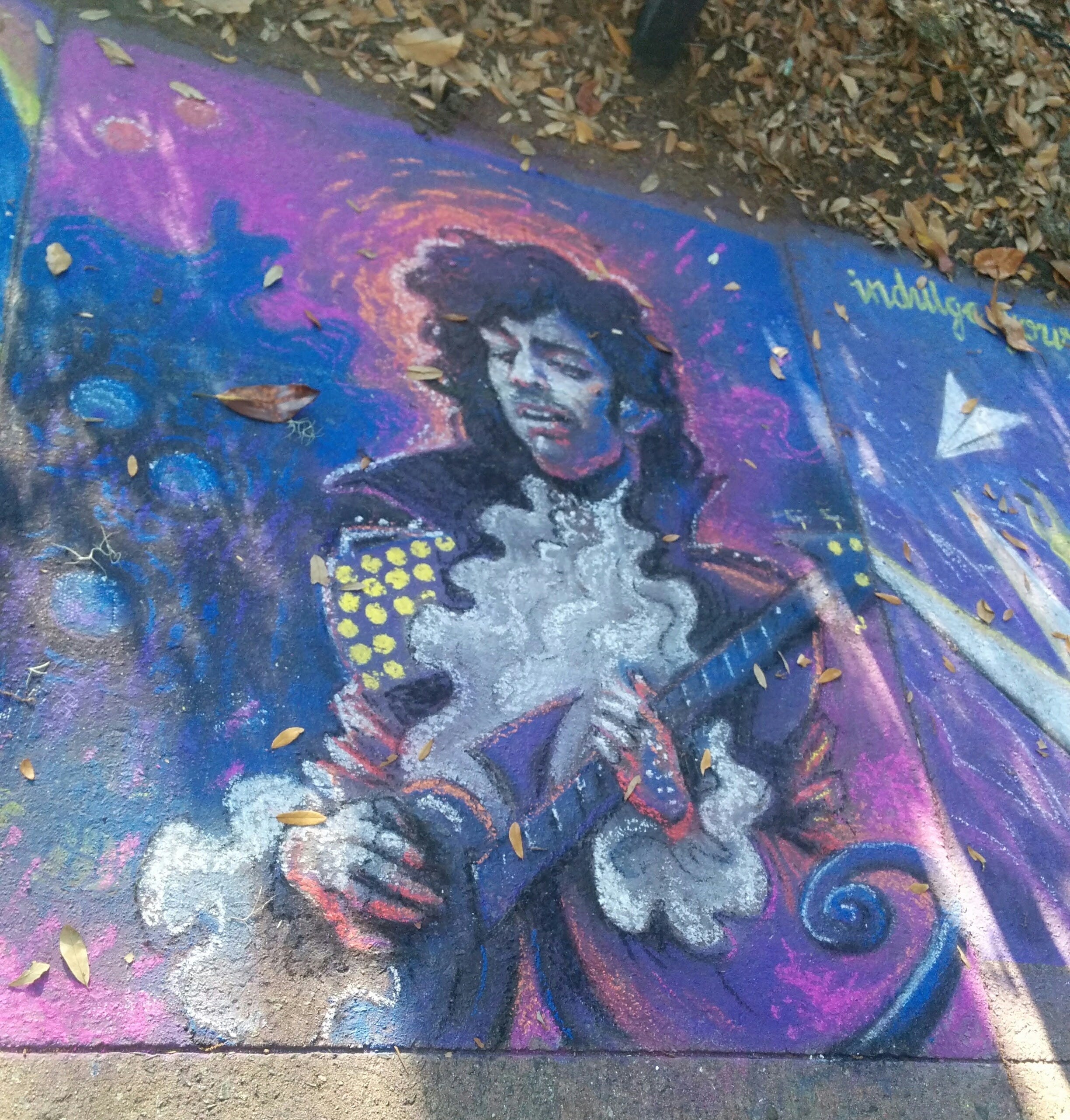
I often think of the musician Prince (1958–2016) when I see jacaranda flowers drifting from the trees to the earth. They make a beautiful but brief "purple rain,” gone all too soon.
The Mexican poet Alberto Ruy Sánchez in 2019 described the jacaranda flowers not as rain, but as flames.
Below are his lines and then my translations (aided by Google) in italics:
“Con su fuego tan florido/(With their fire so vibrant)
y a punto de desprenderse (and at the point of falling free)
es mil llamas en el viento (there are a thousand flames in the wind)
y mil llamas en el piso (and there are a thousand flames on the ground.)
Ruy Sánchez tells us how the jacaranda flowers change Mexico City during their brief stay:
“Este mes y un poco el otro, (This month and a little of the next)
creyéndose primavera, (swept up in the spring)
la ciudad olvida cosas (the city forgets things)
que antes pensaba esenciales (that it earlier thought essential.)”
This line —”creyéndose primavera” might also be read as the city thinking itself the spring, being that caught up in the beauty of the jacarandas.
South American Export, Established in Mexico by a Japanese Immigrant
The people of Mexico City are far from alone in their appreciation of jacaranda trees.
California’s San Diego is said to have spectacular springtime shows of jacaranda. I've only seen the “secondary" autumn blooms on jacaranda trees there, and found even that impressive.


I've read that jacaranda flowers also delight people in Australia and South Africa.
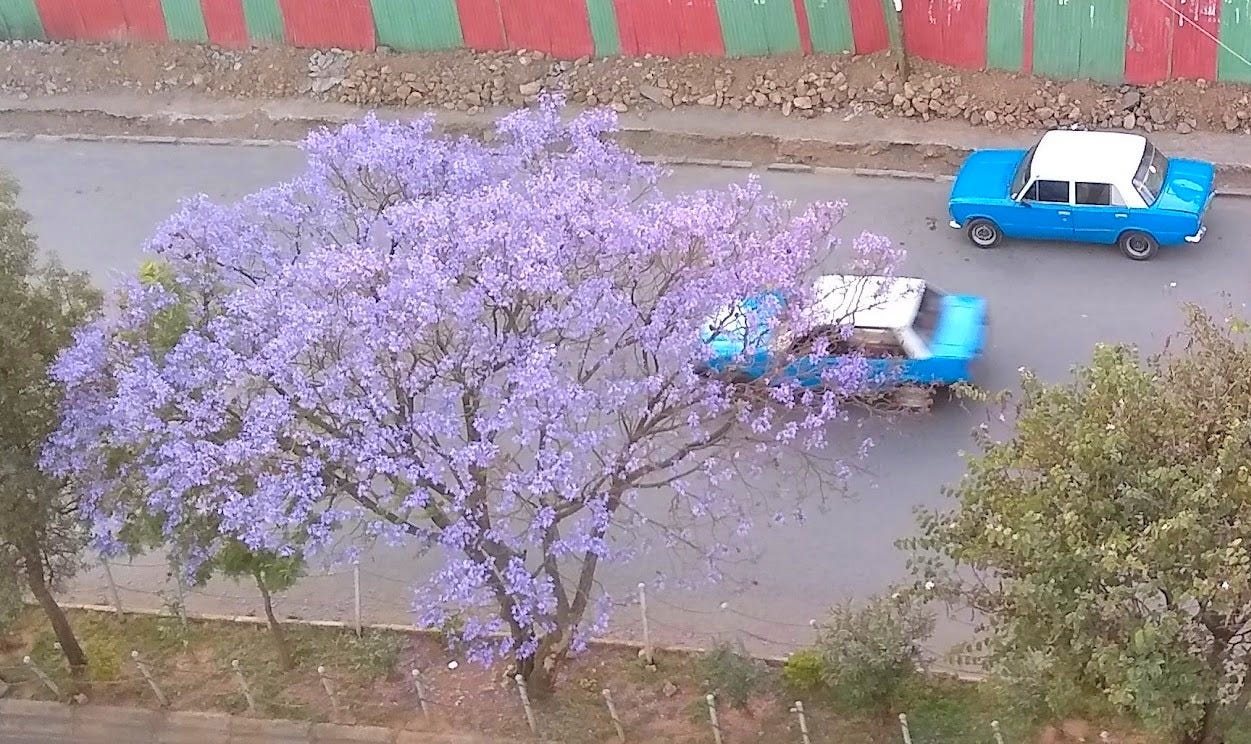
I know they are a hit in Addis Ababa, the capital of Ethiopia.
I've also seen how these flowers add to the beauty of Buenos Aires, which is closer to the original homes of these trees.


The name jacaranda is said to be a word from the Guaraní language, spoken by people in Paraguay and surrounding areas.
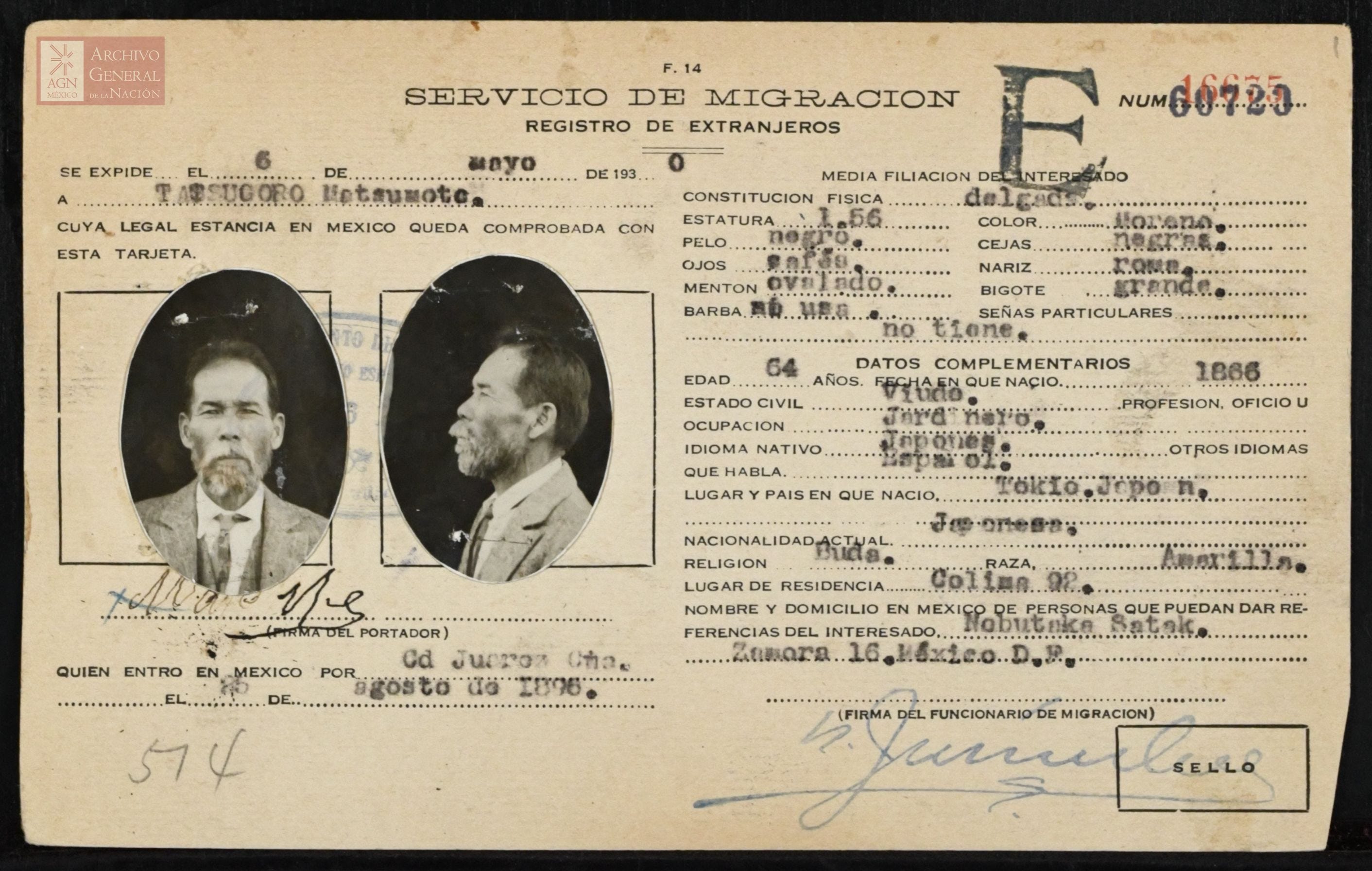
The major initial imports of jacarandas trees to Mexico were the brainchild of a Japanese immigrant, Tatsugorō (Tatsugoro) Matsumoto ( 1861-1955 )
The successful importation of the famous Japanese cherry trees to Washington, D.C., in 1912 caused leaders elsewhere some envy.
Pascual Ortiz Rubio, who served as Mexico's president from 1930–1932, asked the Japanese government to donate cherry trees to his country, wrote historian Sergio Hernández Galindo.
Ortiz Rubio envisioned the same kind of springtime glory of pink blossoms D.C. enjoys for the main boulevards of Mexico City.
Luckily, Ortiz Rubio could consult an expert gardener, Matsumoto, about his plan.
Matsumoto told the president that winters in Mexico City were not cold enough for the cherry trees to fully blossom, wrote Elda Cantú in the New York Times.
“The president wouldn’t get his hanami, the flower-contemplation ritual the Japanese celebrate every spring” with cherry blossoms, Cantú wrote.
Matsumoto had a better idea for Mexico City — jacarandas.
Matsumoto already had imported jacarandas from South America and reproduced them in his greenhouse.
The idea took and Mexico City today enjoys the payoff of Matsumoto's idea.
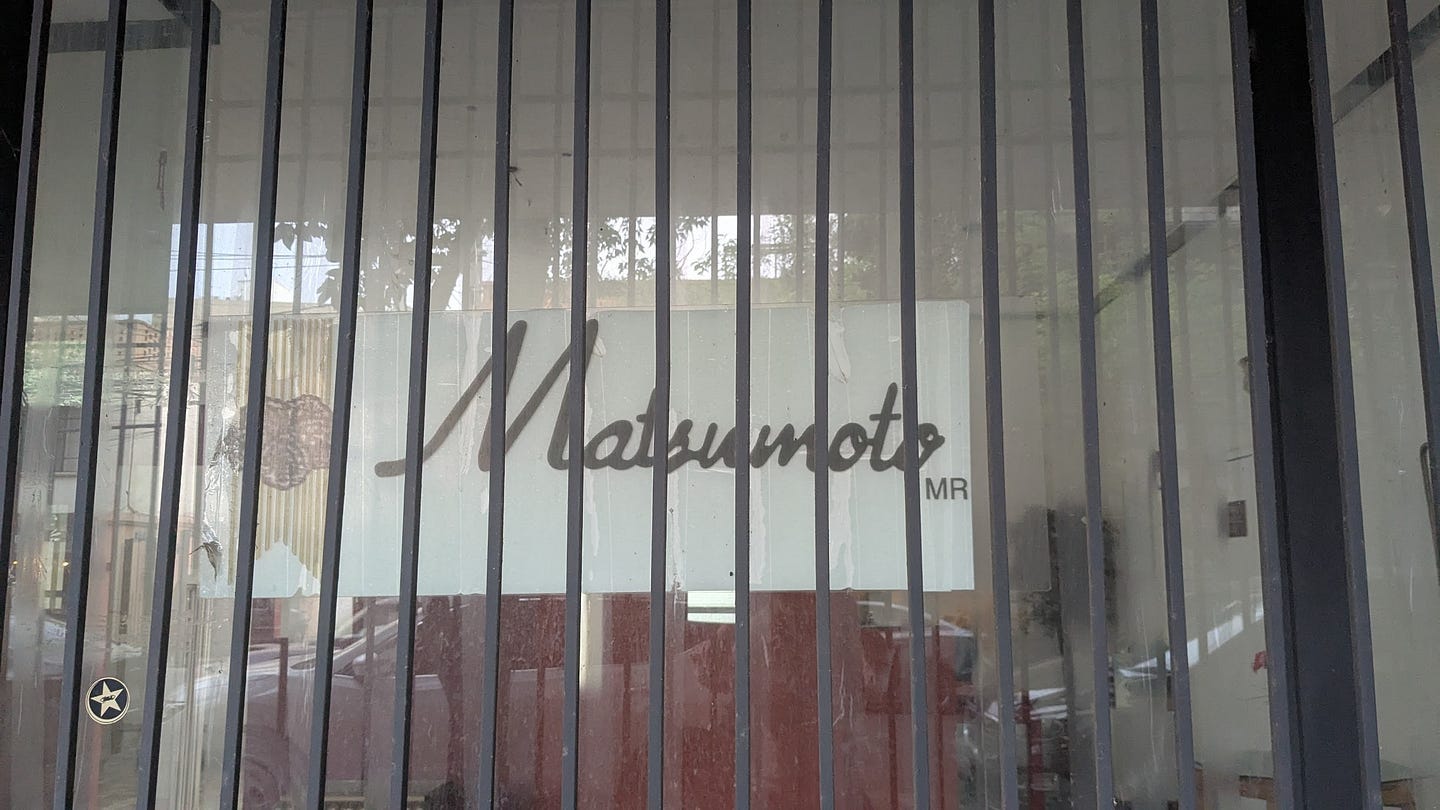
The Matsumoto family remained in the flower business in Mexico City for many decades. The family name remained on a sign in a closed shop in Mexico City's Roma neighborhood as recently as 2025.
In the New York Times article, Cantú notes that “Mexico City’s urban landscape is continually changing: new buildings rise every day, hundreds of palm trees are dying to an unforgiving plague, water-conscious gardeners look for plants that will last through a drought. Winters are becoming shorter and hotter."
But Cantú ends with an optimistic quote from arborist José Luis López Robledo.
“If something will survive, it’ll be the jacarandas,” he says.
Sources cited here:
Bizberg, Andrea, “Las jacarandas decretan: la primavera ha llegado,”Gatopardo, Feb. 15, 2025
Ruy Sánchez, Alberto. "Dicen las jacarandas.”Ediciones Era, 2019.
Hernández Galindo, Sergio, translated by Kora McNaughton. “Tatsugoro Matsumoto and the Magic of Jacaranda Trees in Mexico.” Discover Nikkei, May 6, 2016.
Cantú, Elda. “Mexico City’s Jacarandas Owe Their Fame to a Japanese Gardener.” The New York Times, March 25, 2023
For more on the D.C. cherry blossoms, read Pretty Persistent | Avocado, DC Cherry Trees. There’s a mention of the Matsumoto family in re Survival and Style : Kenjiro Nomura.